
Osteopaths in Grantham: Treatment, Costs and What to Expect
Osteopathy sits alongside physiotherapy and chiropractic as one of the UK’s main manual therapy professions — but many people aren’t quite sure what osteopaths actually do or how they differ. Here’s a clear, honest guide for Grantham.
What Is Osteopathy?
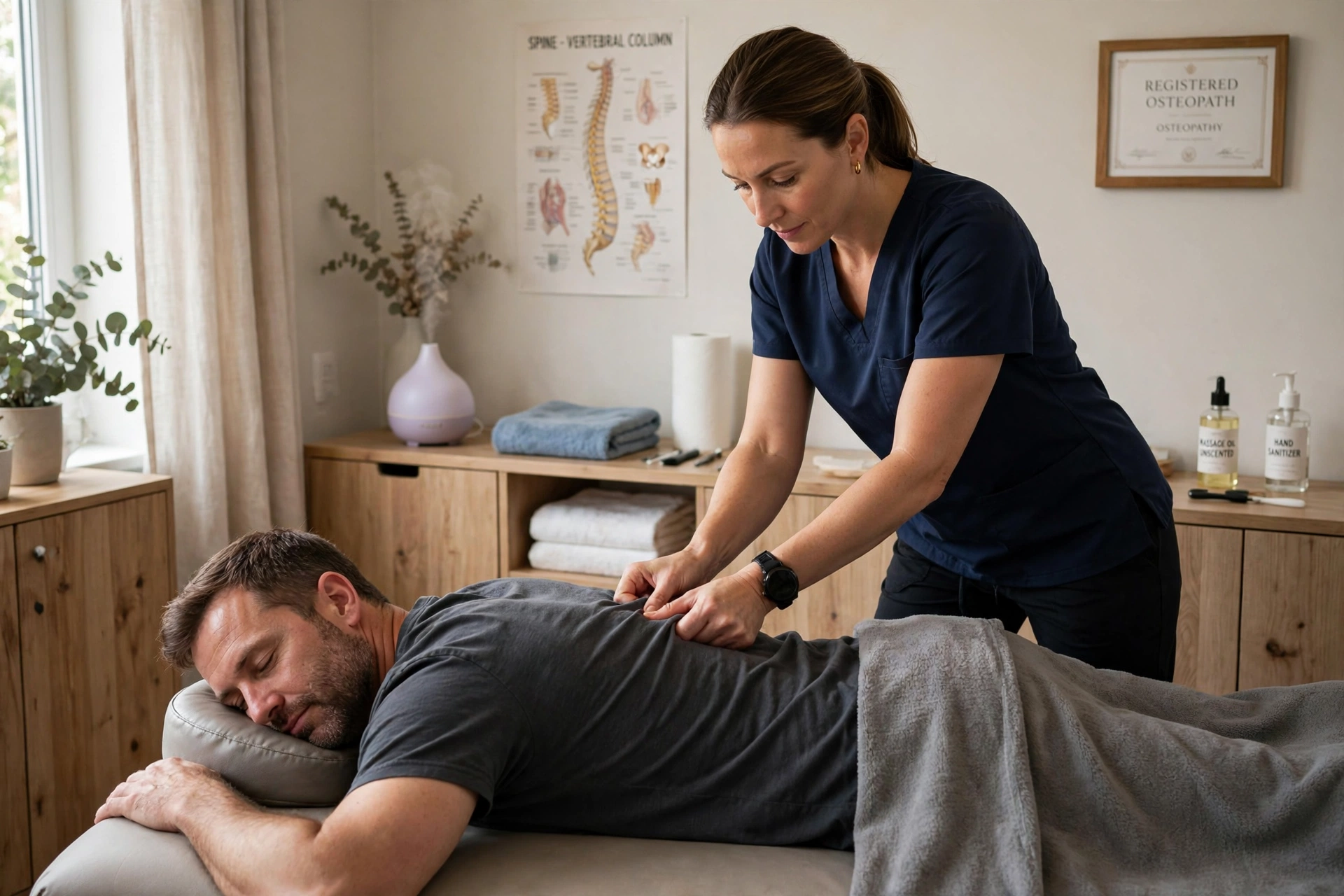
Osteopaths treat musculoskeletal problems — back and neck pain, joint pain, sciatica, sports injuries, postural issues — using hands-on techniques: joint mobilisation and manipulation, soft tissue massage, stretching, and cranial techniques (in cranial osteopathy). Treatment is holistic in philosophy: osteopaths consider how your whole body moves and functions, not just the painful spot.
A first appointment (45–60 minutes) includes a detailed case history, observation of your posture and movement, hands-on examination, and usually treatment. You’ll likely get exercises and lifestyle advice too. Follow-ups run 30 minutes.
Osteopathy in Grantham
Osteopathic techniques are offered within Grantham’s physio clinics, and independent osteopaths practise in the town. When choosing:
- Check GOsC registration. “Osteopath” is a protected title — every UK osteopath must be registered with the General Osteopathic Council. Verify at osteopathy.org.uk. Unregistered practice is illegal.
- Expect a diagnosis. You should leave the first session understanding what’s wrong, the plan, and the expected timeline.
- Exercises matter. As with physio and chiropractic, the best outcomes come from manual therapy plus active exercise — not endless passive sessions.
What Does the Evidence Say?
Similar picture to chiropractic: moderate evidence for osteopathic manual therapy in lower back pain (NICE includes manual therapy as an option within a package including exercise), some evidence for neck pain. For non-musculoskeletal claims — digestive issues, “cranial” treatment of systemic conditions — credible evidence is lacking. A straightforward osteopath who sticks to backs, necks and joints is the one to trust.
Osteopath vs Physiotherapist vs Chiropractor
Honest answer: for most back and neck pain, the differences between these professions matter less than the individual practitioner’s skill and approach. All three use manual therapy; physios typically emphasise exercise rehabilitation most strongly; chiropractors focus most on spinal manipulation; osteopaths take the most “whole-body” approach. Any of the three, done well and combined with exercise, can help. Choose based on recommendation, registration, and whether the practitioner’s approach makes sense to you — not the letters after their name.
Costs
- Initial consultation: £45–£65
- Follow-ups: £35–£55
Osteopathy is almost entirely private in the UK (very limited NHS availability). Some private health insurance covers it.
Safety
Osteopathy is generally safe with a registered practitioner. As with chiropractic, spinal manipulation carries small risks — a responsible osteopath screens for red flags (osteoporosis, inflammatory conditions, blood thinners, recent trauma), explains risks, and obtains consent. Speak up about any health conditions and medications at your first visit.
FAQs
How much is an osteopath in Grantham? £45–£65 for the initial consultation; £35–£55 for follow-ups.
How many sessions will I need? Typically 3–6 for straightforward problems. Your osteopath should set review points and refer on if you’re not progressing.
What’s the difference between an osteopath and a chiropractor? Philosophy and emphasis differ, but in practice there’s substantial overlap for back and neck pain. Both are statutorily regulated; choose a good individual practitioner either way.
Disclaimer: This article is for information only and is not medical advice. Consult a GOsC-registered osteopath, qualified physiotherapist or GP for personal advice. Seek urgent care for red-flag symptoms (bladder/bowel changes, saddle numbness, major trauma).