Yoga Classes in Grantham: A Beginner’s Guide
“I’d love to try yoga but I’m not flexible enough.” If that’s you, here’s the secret every yogi knows: nobody starts flexible. Flexibility is the result of yoga, not the entry requirement. Grantham has welcoming beginner-friendly classes — here’s where to find them and what to expect.
Where to Do Yoga in Grantham
- Barn Hotel — runs yoga fusion classes as part of its health club timetable, in a calm setting with pool and sauna to enjoy afterwards
- PureGym — includes MIND classes (yoga/Pilates-style) in membership; book via the app
- Independent studios and teachers — Grantham has freelance yoga teachers running classes in community halls and studios; check local listings and social media for current timetables
- Grantham Squash & Fitness — classes included in membership
Drop-in prices at independents run £8–£12 per class; monthly unlimited at studios £40–£60. Gym-based classes are included in membership.
Yoga Styles: Which One for Beginners?
- Hatha: gentle, slow-paced, holds poses — the classic beginner starting point
- Vinyasa/flow: movement linked to breath, more dynamic — try after a few hatha classes
- Yin: long-held passive stretches (3–5 minutes per pose) — deeply relaxing, great for tight athletes and desk workers
- Restorative: supported relaxation with bolsters — practically a nap with benefits
- Ashtanga: vigorous, structured sequence — demanding; build up to it
- Hot yoga: practised in a heated room — intense; stay hydrated and don’t eat heavily beforehand
For a first class: hatha, gentle flow, or yin. Tell the teacher you’re new — they’ll offer modifications.
What to Expect at Your First Class
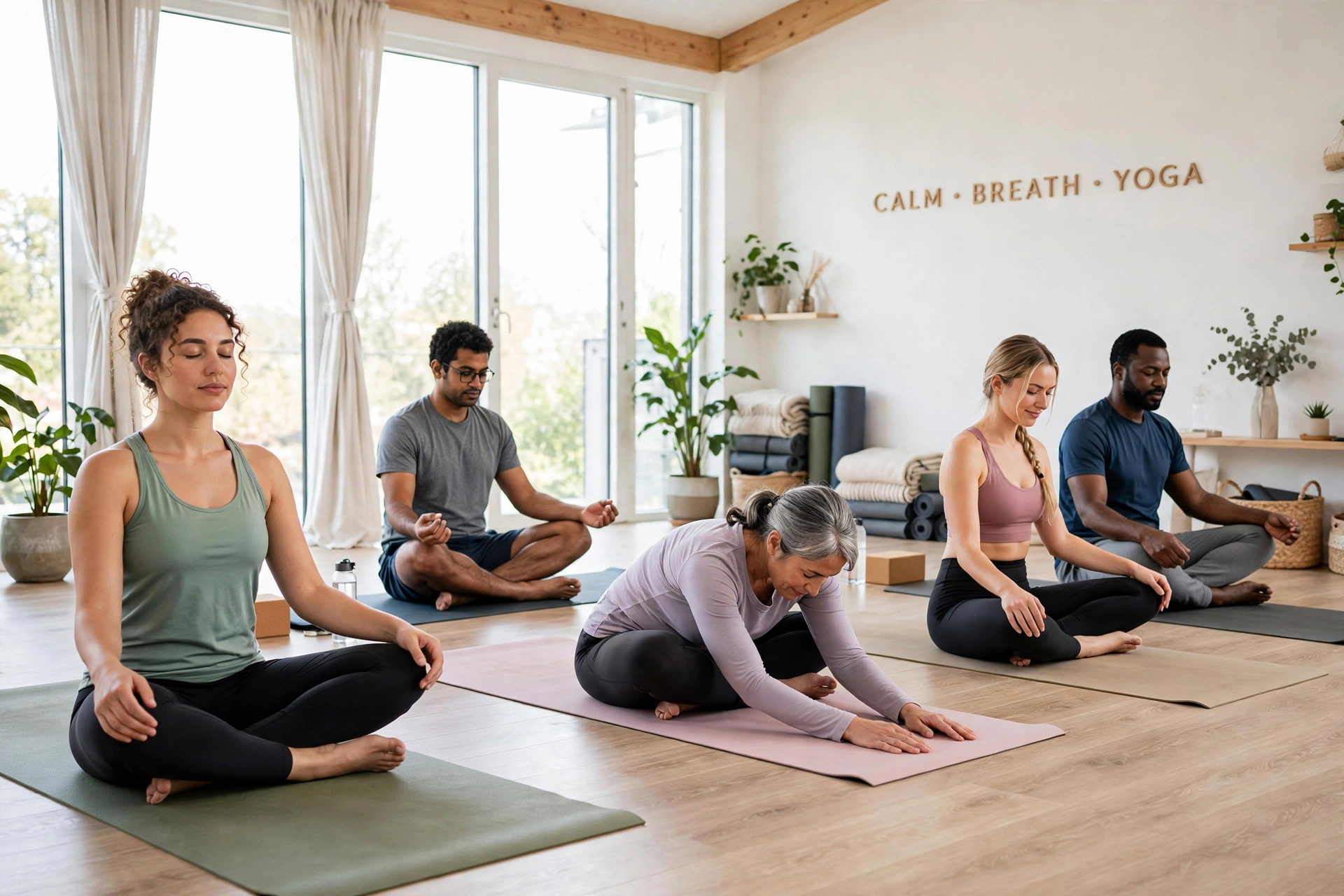
- Arrive 10–15 minutes early — introduce yourself to the teacher, mention any injuries
- Mats: studios provide them, but your own mat (£15–£30) is nicer long-term
- Wear: comfortable stretchy clothes; yoga is done barefoot
- The class: typically 60–75 minutes — breathing exercises, warm-up, poses, relaxation (savasana) at the end
- Don’t compare yourself to the bendy person in front. They’re on year five; you’re on day one
You’ll probably be a bit achy the next day — that’s normal. It fades as your body adapts.
Benefits (What the Evidence Supports)
- Flexibility and balance — well established, and balance matters more as we age
- Strength — particularly core and upper body in stronger styles
- Back pain — NICE-recommended as an option for persistent lower back pain
- Stress and sleep — good evidence for stress reduction; many people sleep better
- Body awareness — you start noticing posture and tension patterns
Yoga isn’t a cure-all, and claims beyond these deserve scepticism — but as exercise that combines movement, strength, flexibility and mindfulness, it’s genuinely hard to beat.
Yoga at Home
Once you’ve learned the basics in class (important for safe alignment), home practice via apps or YouTube keeps it going between sessions. But start in person — a teacher correcting your downward dog is worth a month of videos.
FAQs
I’m really stiff — can I still do yoga? Yes — that’s exactly who beginner classes are for. Use blocks and straps (studios provide them); there’s no prize for touching your toes on day one.
How often should I go? Once a week is a great start; twice a week and you’ll feel real change within a month or two.
Is yoga enough exercise on its own? It’s excellent for flexibility, balance, core strength and stress. For cardio fitness and bone density, add walking, swimming or gym sessions alongside.
Disclaimer: This article is for information only and is not medical advice. If you’re pregnant, have a health condition or are recovering from injury, check with your GP or midwife before starting yoga, and inform your teacher.