










Your feet carry you through every day, from the school run to a walk around town, yet most of us only think about them when something starts to hurt. A sore heel, a painful toenail or a corn that will not go away can make even a short walk miserable, and small problems left alone have a habit of getting worse. This guide explains when to see a foot specialist in Grantham, the most common foot problems, and the simple daily habits that keep your feet healthy.
Podiatrists and Chiropodists: What’s the Difference?
In the UK, “podiatrist” and “chiropodist” describe the same profession. Podiatrist is the more modern term, but both are protected titles, which means anyone using them must be registered with the Health and Care Professions Council (HCPC). A podiatrist diagnoses and treats problems with the feet and lower legs, including corns and calluses, ingrown toenails, verrucas, heel pain, nail problems, and diabetic foot checks. They can also advise on footwear and on exercises that help with foot and ankle pain.
On the NHS, podiatry is usually available for people with a medical need, such as diabetes, poor circulation, or a condition that makes it hard to look after your own feet. Availability and eligibility vary, so your GP practice or the NHS website can tell you what is available locally. Anyone can also book an appointment with a private podiatry clinic in Grantham. As with any local service, check the clinic’s own website for current details about appointments and what they offer before you book.
Common Foot Problems and When to Get Help
Heel pain is one of the most common reasons people visit a podiatrist. It often feels worst with the first steps in the morning or after sitting for a while. Rest, supportive footwear and gentle stretching help many people, but pain that keeps coming back is worth getting checked.
Ingrown toenails happen when the edge of a nail grows into the surrounding skin, causing pain, redness and sometimes infection. Cutting nails straight across, rather than rounding the corners, and wearing shoes that do not squeeze the toes can help prevent them. If a toenail is very painful, swollen or infected, a podiatrist can treat it safely rather than you trying to cut it out yourself.
Athlete’s foot is a common fungal infection that causes itchy, flaky skin, usually between the toes. It is picked up easily in warm, damp places such as changing rooms and showers, and it usually responds to treatments available from a pharmacy. Corns and calluses are areas of thickened skin caused by pressure or friction, often from shoes that do not fit well. Verrucas are small warts on the soles of the feet, and bunions are bony lumps at the base of the big toe that can make shoes uncomfortable.
See a podiatrist or your GP if foot pain lasts more than a couple of weeks, if there is swelling or redness that does not settle, if a cut or sore is not healing, or if foot pain is stopping you from walking normally. People with diabetes should check their feet every day and get prompt help for any cut, blister or sore, however small, because healing can be slower and small problems can escalate quickly.
Everyday Foot Care at Home
Good foot care takes only a few minutes a day. Wash your feet daily with warm water and soap, then dry them thoroughly, especially between the toes, where moisture can encourage fungal infections. Moisturise the tops and soles of your feet to stop the skin drying and cracking, but avoid putting cream between the toes.
Trim your toenails straight across and not too short, and file any sharp edges smooth. Wear clean socks every day, choosing breathable materials where possible, and choose shoes that fit properly, with enough room for your toes, a supportive heel and a low heel height. Break new shoes in gradually rather than wearing them for a long walk on the first day, and rotate your shoes so each pair has time to air out.
It is also worth checking inside your shoes for anything that might rub, and replacing worn-out trainers, since tired soles stop supporting your feet properly. Avoid walking barefoot in public changing rooms and around swimming pools, where verrucas and athlete’s foot spread easily.
Foot Care and Staying Active in Grantham
Healthy feet make it much easier to stay active, and staying active is good for your feet in return. Walking, swimming and gentle exercise all help circulation and keep the muscles in your feet and legs working well. If foot pain is stopping you from walking or exercising, that is a good reason to book an appointment rather than putting up with it.
If you would like ideas for getting moving locally, our guide to walking in Grantham covers easy routes and walking groups, and our guide to physiotherapy in Grantham explains how a physiotherapist can help with foot, ankle and leg pain that affects how you move. Look after your feet now, and they will carry you much further.
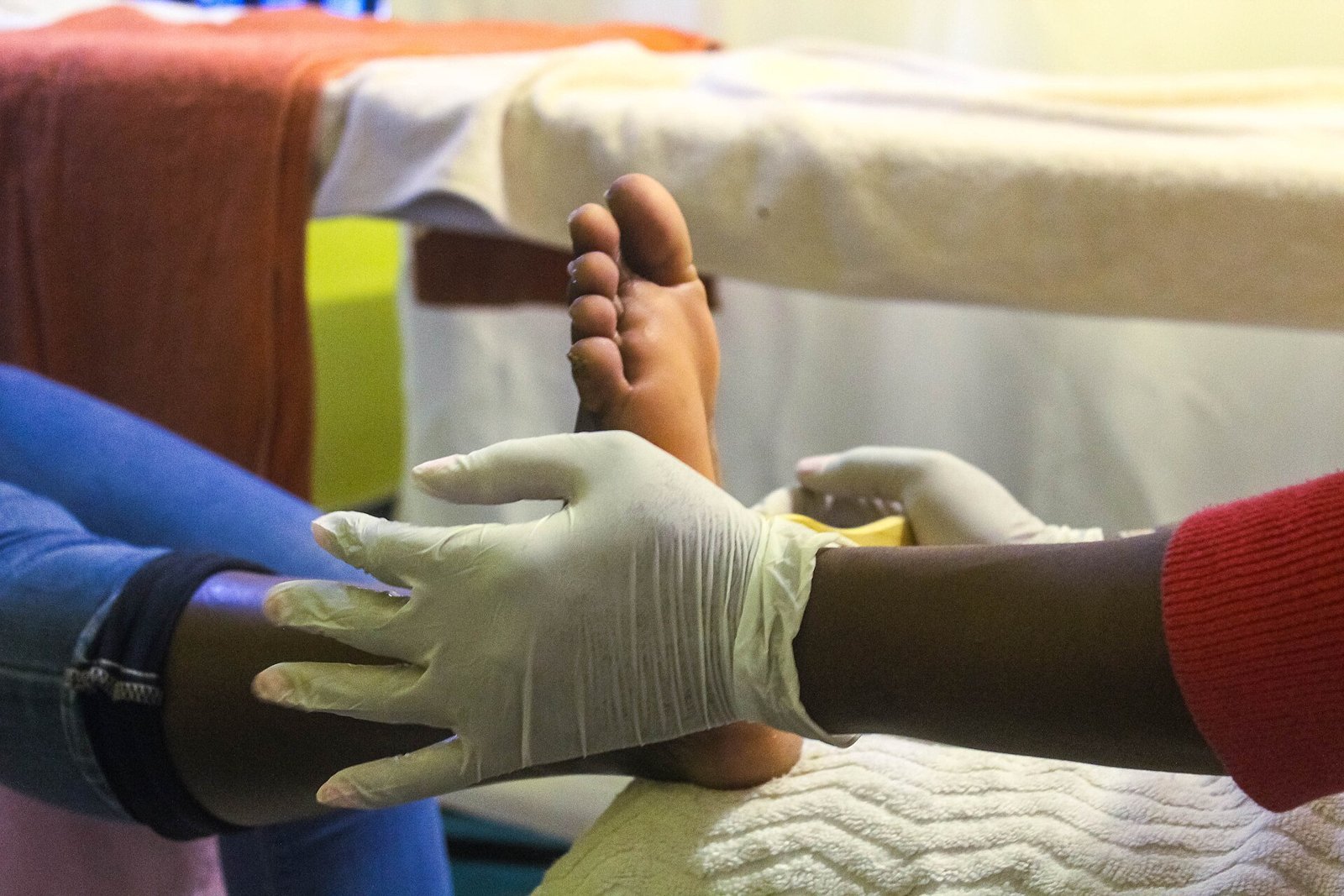
Featured image: “Foot massage at a spa” by Kolobetsoo, Wikimedia Commons (CC BY-SA 4.0).