








Hearing loss usually creeps up slowly. You start asking people to repeat themselves, turn the television up a notch, or struggle to follow conversations in a busy cafe. Because it happens so gradually, many people put off getting checked for years. If that sounds familiar, a hearing test is a simple, painless first step, and Grantham residents have both NHS and private options to choose from. This guide explains when to get tested, what each route involves, and what happens next if you need hearing aids.
When should you get your hearing tested?
Adults of any age can develop hearing loss, but it becomes more common from your fifties onwards. Consider booking a test if you regularly miss parts of conversations, find it hard to hear in noisy places, need the television or radio louder than others prefer, or notice ringing or buzzing in your ears. Sudden hearing loss, hearing loss in one ear only, or discharge from the ear should be checked by your GP promptly rather than waiting for a routine test.
Even if you are not sure there is a problem, a baseline test is useful. It gives you a record to compare against in future, and catching gradual hearing loss early makes it much easier to adjust to hearing aids if you eventually need them. Children with suspected hearing problems follow a different route, usually starting with a GP or health visitor referral to a specialist children’s audiology service.
NHS hearing tests in Grantham
On the NHS, the usual starting point is your GP. If your doctor agrees a hearing test is needed, they will refer you to an NHS audiology service. Your hearing test and any hearing aids you need are free on the NHS, including follow-up appointments, repairs and batteries, although waiting times for a first appointment can vary, so ask your GP or the audiology department for current waiting times.
NHS hearing aids are modern digital devices, fitted and programmed to your hearing test results. You will usually have a follow-up appointment to check the fit and fine-tune the settings, and you can return for help if anything stops working. Some people choose the NHS route and are perfectly happy with it, particularly if their hearing loss is straightforward and they are not in a hurry.
Private hearing tests in Grantham
Private hearing care is available from high-street hearing centres and independent audiologists in and around Grantham. You do not need a GP referral for a private test, and appointments are often available within a few days. Many providers offer a free initial hearing check, with a full diagnostic test charged separately, so ask exactly what is included before you book.
The main reason people go private is speed and choice. Private providers usually stock a wider range of hearing aids, including smaller and rechargeable models, and can often fit them on the same day as the test. Prices vary widely depending on the technology level, so always ask for a written quote that covers the hearing aids, fitting, follow-up appointments and aftercare, and check how long the warranty and aftercare package last before you commit.
What happens during a hearing test?
A standard adult hearing test is straightforward and takes around half an hour to an hour. The audiologist will first look inside your ears with a small light to check for wax or infection, since a build-up of ear wax alone can cause temporary hearing loss. If wax is a problem, they may suggest having it removed before the hearing test itself, either by your GP practice or a private ear wax removal service.
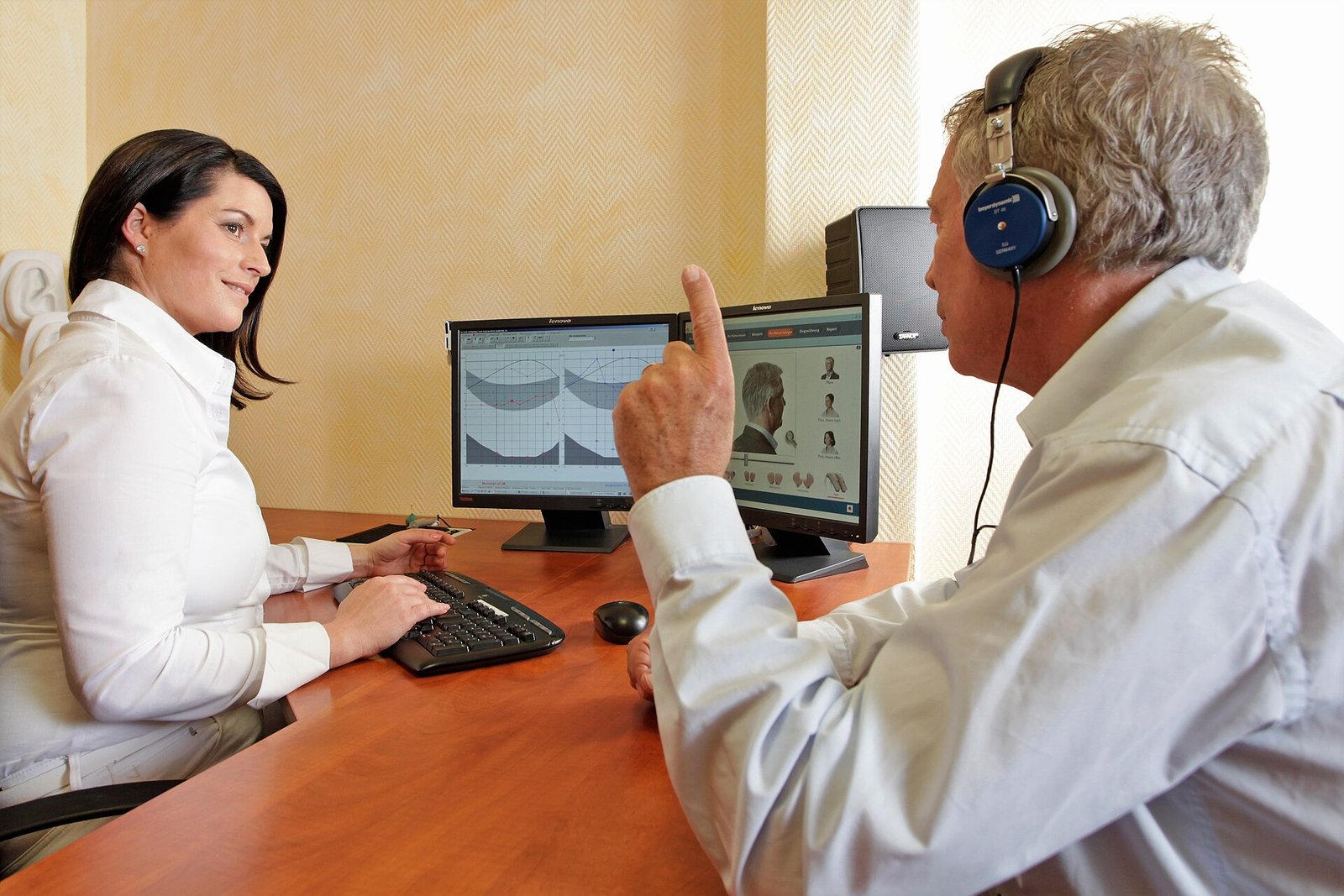
The main test is called pure-tone audiometry. You wear headphones and press a button, or raise your hand, each time you hear a quiet beep at different pitches, first in one ear and then the other. You may also have a speech test, where you repeat back words played at different volumes, and a pressure test that checks how well your eardrum moves. None of it hurts, and your results are plotted on a chart called an audiogram, which the audiologist will explain to you before discussing your options.
Hearing aids and aftercare
If your test shows hearing loss, hearing aids are the usual treatment. The most common styles are behind-the-ear models, which suit most levels of hearing loss, and smaller in-the-ear models, which are more discreet. Your audiologist will programme the aids to your results and show you how to fit, clean and look after them. Most people need a few weeks to get used to the sound, and a follow-up appointment to adjust the settings is normal.
Aftercare matters as much as the fitting. Hearing aids need regular cleaning, and batteries or charging need to become part of your routine. If your hearing changes, you have feedback or whistling from the aids, or one stops working, contact the provider who fitted them rather than struggling on. On the NHS, replacement batteries and repairs are free, and most private providers include a period of aftercare in the price.
Related Guides
- GP Practices in Grantham: How to Register, Book Appointments and Get the Care You Need
- Opticians in Grantham: Eye Tests, Glasses and Contact Lenses
- More Medical Services guides
Photo: Bundesinnung Hörakustiker / Wikimedia Commons, licensed under CC BY-SA 2.0.