
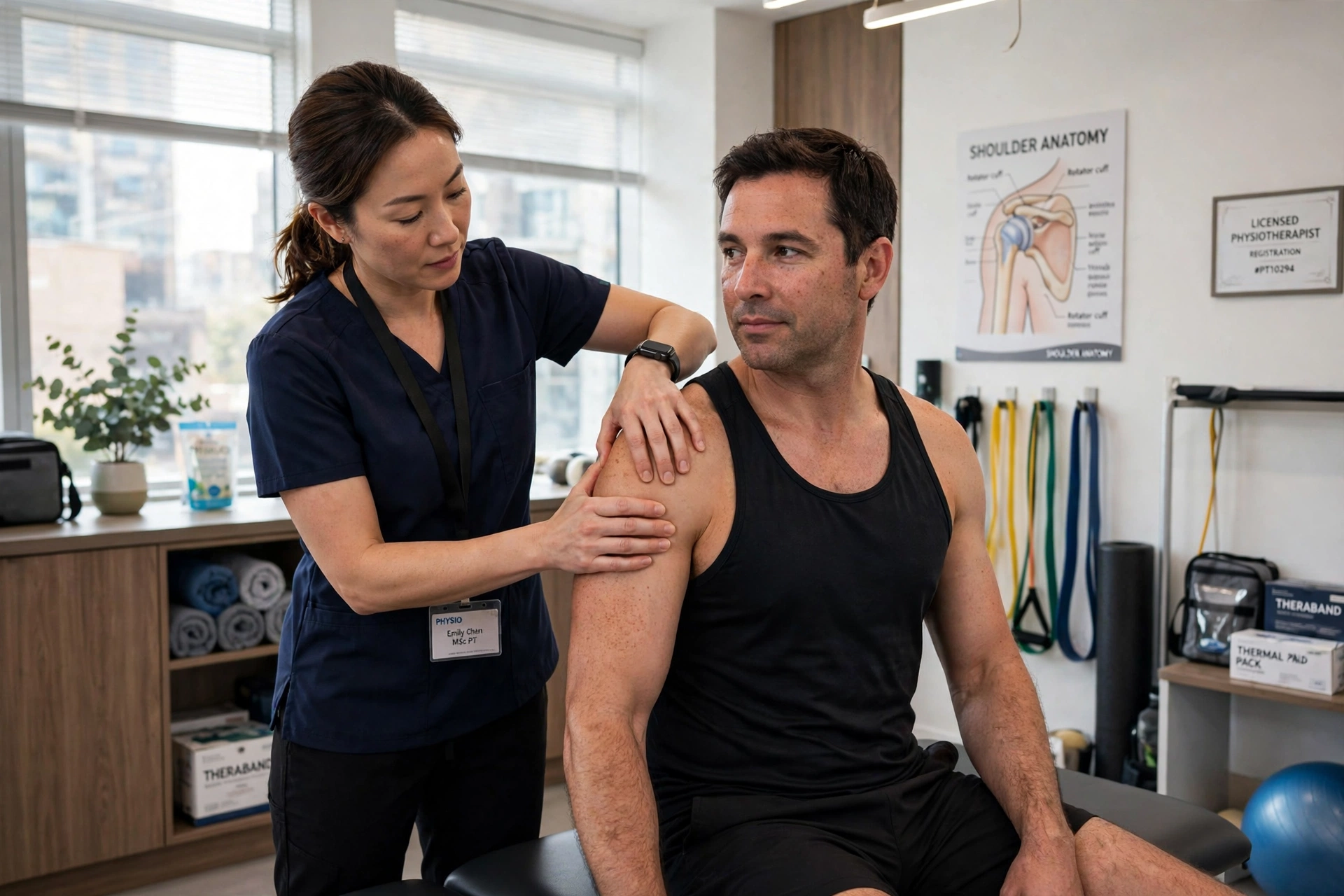
Physiotherapy in Grantham: Clinics, Treatments and Costs
Back pain that won’t shift. A knee that clicks. A shoulder that aches every time you reach overhead. Physiotherapy is the evidence-based answer to musculoskeletal problems — and Grantham has experienced clinics. Here’s what physios do, where to go, and what it costs.
Physiotherapy Clinics in Grantham
Two well-established names lead the local market:
The Physio (Market Place) — around 25 years in practice, specialising in sports injury rehabilitation, back and neck pain, sports massage and acupuncture (from £45). A strong choice for sportspeople and active patients.
Grantham Physiotherapy Practice (St Catherine’s Road) — general musculoskeletal physiotherapy covering back/neck pain, sports injuries, post-surgical rehab and chronic pain, with osteopathic techniques also available.
Both are private clinics. For NHS physiotherapy, your GP refers you into the Lincolnshire community physiotherapy service — effective but with waiting lists that can stretch to weeks or months for non-urgent cases.
What Physiotherapists Treat
- Back and neck pain (the number one reason people seek physio)
- Sports injuries — sprains, strains, tendon problems, rehab after injury
- Post-surgical rehabilitation (knee/hip replacements, arthroscopy, spinal surgery)
- Sciatica and trapped nerves
- Whiplash
- Repetitive strain injuries
- Arthritis management
- Headaches with a musculoskeletal component
- Balance and mobility problems (especially in older adults)
Physiotherapy is a protected title in the UK — every practising physiotherapist must be registered with the HCPC (Health and Care Professions Council) and most are members of the Chartered Society of Physiotherapy (CSP). You can verify registration at hcpc-uk.org. This matters: it guarantees degree-level training and professional standards.
Private Physio Costs in Grantham
- Initial assessment (45–60 min): £45–£65
- Follow-up sessions (30 min): £35–£50
- Sports massage: from £45
- Acupuncture (as an adjunct): from £45
Most simple problems need 3–6 sessions. Your physio should give you an honest estimate at the first appointment — be cautious of anyone booking you for 20 sessions upfront without review points.
NHS vs Private Physio
NHS: free, but expect waiting lists; fewer sessions; less choice of appointment times. Fine for many problems if you can wait.
Private: seen within days; longer appointments; your choice of clinic; direct access (no GP referral needed). You pay, but you start rehab weeks or months sooner — and with musculoskeletal problems, early treatment generally means better outcomes.
Many people use both: private for the initial assessment and early rehab, NHS for ongoing care.
What Good Physio Looks Like
A good first appointment includes: a thorough history, physical examination, a clear diagnosis in plain English, a treatment plan with realistic timelines, and — crucially — exercises to do at home. Exercise prescription is the core of modern physiotherapy; hands-on treatment (manual therapy, massage, acupuncture) supports it but doesn’t replace it.
Red flags: no assessment before treatment, endless passive treatment with no exercises, no re-measurement of progress, or guarantees of a cure.
FAQs
Do I need a GP referral for private physio? No — private physiotherapists accept direct bookings. You only need a GP referral for NHS physiotherapy.
How many physio sessions will I need? Most straightforward problems: 3–6 sessions. Complex or post-surgical rehab: longer. Your physio should estimate this at assessment.
Is physiotherapy painful? Some techniques are briefly uncomfortable, but treatment shouldn’t leave you worse. Tell your physio if something feels wrong.
Disclaimer: This article is for information only and is not medical advice. For injuries or persistent pain, consult a qualified physiotherapist (HCPC-registered) or your GP.